
A conversation as held by an expert group panel on the issue of future funding for third-level educa
What is going to happen next? The continuing conversation...
Reform is likely to be on the way with the government proactively looking at three options
The first would see an increase in government funding and removal of registration fees
The second would an increase in government funding and the registration fees remain in place
The third would see a change based somewhere in between the Australian HECS and British Loan systems.
The Irish government is currently looking into possible ways to reform their third-level education funding system. This was triggered by the growing difficulties universities and colleges have faced after years of austerity, when funding dropped from €1.4 billion in 2007 to just €860 million in 2015. Core funding per student fell by 22%. This reduction has been met by a growing demand for higher education. And according to the research, this trend is unlikely to change over the coming years.
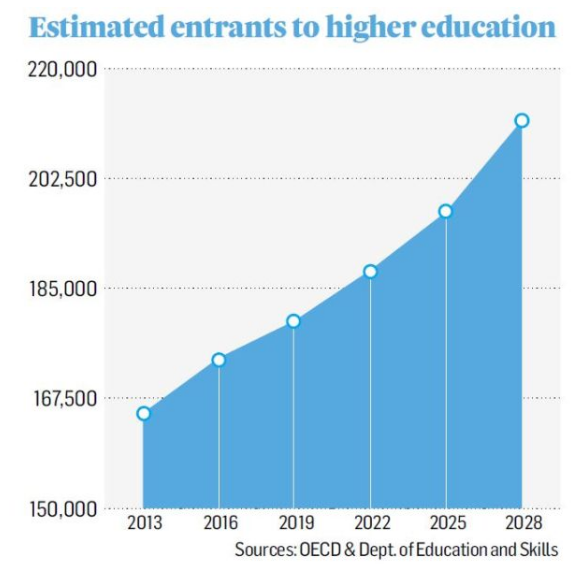
On the 11th of July, 2016, the Minister for Education, Richard Burton, welcomed the report of an expert group panel on Future Funding for Higher Education. The document, which can be found here, lays ground for three possible ways of reforming the financing of third-level education within Ireland.
Under the first option, the student contribution (currently, €3000 p.a.) would be abolished. Additional state funding would fill the gap in colleges’ budgets. This increase in public funding would have to be significant, as the sector needs further resources to increase staff to student ratios while making capital investments. The report estimates that overall state funding would increase from 64% to 80% as a result. Supporters of this model underline that abolishing student contribution would make higher education more accessible and affordable. The biggest counter-argument relates to the fact that not everybody goes into higher education, therefore, not everybody should be paying for it through general taxation.
The second option would see the student contribution remain on the same level with moderately increased funding from state coffers. Fees would still be waived for students whose parents’ income is low. The estimated increase in state contribution would bring it up to 70-72% of the overall third-level education spending in Ireland. The report states this increase would allow colleges and universities to hire additional required staff and increase capacity to meet the growing demand.
The third and final option put forward by the Expert Group would see a student loan system introduced. There would be no student charges upon entry. Instead, the Government would provide a loan to the student to cover a full cost of tuition. This system would most likely mirror similar solutions adopted in the United Kingdom and Australia. After graduating, and reaching a certain income threshold, a percentage of earnings would be deducted in the same manner as income tax until the loan would be paid back in full. The report states that even with this model, state direct funding would have to increase.
Reference links for additional reading:
Comments